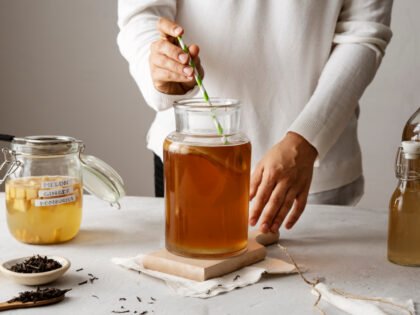

How to make Kombucha at home, a stepwise guide for a beginner
-
admin
- Posted on
- 0 comments
Kombucha is fizzy, enjoyable and full of probiotics. It is easy to prepare at home with a few ingredients. Homebrewing Kombucha is simpler than you might have thought, whether you want to save some money, flavour test, or even regulate the levels of sugar.
This is a simple introduction for a beginner.
Ingredients: all you need
- 1 SCOBY (Symbiotic Culture of Bacteria and Yeast)
- 2-4 black or green tea bags (or loose leaf)
- 100-150 grams sugar (brown or cane sugar)
- 1-2 litres of water
- Starter liquid (from previous kombucha batch or store-bought raw Kombucha)
Optional flavouring ingredients for secondary fermentation:
- Fruits: Mango, berries, citrus, pineapple
- Herbs/ spices: Mint, ginger, cinnamon
- Flowers: Lavenders, hibiscus
Step 1: Brew sweet tea
- Add water to boil and steep the tea for 5-10 minutes.
- Remove tea leaves or tea bags and dissolve sugar while it’s hot.
- Let the tea cool down to room temperature, because hot tea may destroy the SCOPY.
Step 2: Add the SCOBY
- Transfer cooled sweet tea into a clean glass jar.
- Add starter liquid (~ 10-15% of total volume).
- Add the SCOBY on top.
Cover with a breathable cloth or paper towel to protect from any bugs or dust.
Step 3: Primary Fermentation
- Allow to ferment for 7-14 days at room temperature (20-25 degrees Celsius)
- Taste daily starting on day 7 to determine your preferred balance of tanginess and sweetness.
Step 4: Flavouring and Secondary fermentation (optional)
- Add berries, fruits or spices to the bottle.
- Seal and leave for 2-5 days at room temperature to naturally carbonate.
- Tip: Use a swing-top bottle to fizz it better.
Step 5: Refrigerate & Enjoy
- When it is carbonated to your preference, refrigerate to slow down fermentation.
- Kombucha is ready to drink for up to 2-3 weeks.
Tips for beginners
- Always sterilise your equipment to avoid mould.
- Filtered water should be used to prevent the impact of chlorine on fermentation.
- Metal containers should be avoided (except stainless steel), as they are reactive to acids.
- Make SCOBY healthy by saving a little of the starter liquid to use the next time.
- Enhance flavour in secondary fermentation, and have fun while preparing it.